
Arduino Cookbook 3rd Edition

The third edition is now available. I was tempted to buy an earlier version but a lot has happened to the available Arduino devices since the second edition was published in 2012.
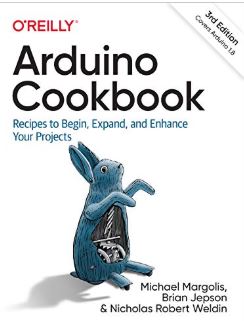
This is not really a beginners book for Arduino or for programming in C, but its eighteen chapters and seven appendices makes it an excellent sourcebook for writing code that works.

With the introduction of chips like ESP32 and beyond, the chapters on Wireless, Bluetooth, WiFi and Ethernet are particularly welcome.

The layout using Discussions, Problems and Solutions makes the book very readable and with over 200 coding examples the forty pound price tag is quite reasonable.

I think if your serious about learning and using Arduinos on your layout projects, then the Arduino Cookbook 3rd Edition should be on your bookshelf


Comments

Popular posts from this blog

Train sequence / timetable using Arduino

                              Following discussions in a MERG Zoom meeting about potential projects for the Cumbria virtual area group I have started this blog to share my ideas for building a train sequence / timetable system based on an Arduino UNO. The trigger for this project was Andy Robb's article in the MERG journal (June 2020 edition). In it Andy describes using an UNO with a OLED display to produce an electronic station display board.  Having tried out Andy's version I started thinking about expanding the idea and have come up the following list of possibilities: 1. Replace my card index train sequence with an electronic version. 2. Have the train sequence synchronised with the on platform displays. 3. Display an analogue clock on the station display and have it display the train times. 4. Store the position reached in the sequence so that it starts where it left off on power up.  To mak...

Push button Ezypoints

 A few months ago I produced a batch of Ezypoint kits for our local members to overcome a shortage in the Kitlocker.  At that time the kit was produced on stripboard which some members find problematic. An additional PCB board normally available from MERG was not available either.  Alan Turner ( the PCB designer) had only a few boards available but graciously provided me with the gerber files to allow me to order PCBs directly from China . Having sourced all necessary components, the kits were duly made up. I find this simple kit is really useful for automation projects. A toggle switch provides either a HIGH or LOW on the PIC input pin to determine which of the two servo positions is selected. For a particular application, I wanted to use a push button to toggle the position on alternate presses of the button. This involved a rewrite of some of the code in the PIC. I initially developed the program using an Arduino as a means of testing the logic. When this was successfu...

Cumbria Group Meeting Friday 9th October

 Although this was only a coffee and chat meeting, eleven members joined us for an interesting session which basically covered what was on our workbenches. Some members suffered from technical gremlins on the Zoom session but hopefully they will have that sorted for next time. Andy Woolass had volunteered to be a guinea pig for building the latest version of an EzyBus Input Module. It was a fairly straightforward build but the lack of sufficient ground points for external connections was a suggested improvement. The original Input board which used an MCP23017 Module was originally supplied by Davy Dick for £2. Members trying to build their own using a provided PCB, sometimes fell foul of the different form factors of this Module which caused obvious fitting problems. It is for this reason the PCB has been redesigned to accept a more standard 28 Pin DIL device. The Kit will be available in the Kitlocker, but at £7.20 it is a little expensive. Various members showed Arduino developme...